Detroit has a complex and evolving relationship with Building Teardown Detroit. As one of the American cities most deeply engaged with urban demolition having removed thousands of blighted structures through Proposal N and ongoing blight elimination programs Detroit also represents a city in active transformation where demolition creates the space for renewed investment, greening, and new construction. For property owners, developers, and community stakeholders, understanding what a building teardown actually involves helps set realistic expectations about the process, its requirements, and its outcomes.
What Is a Building Teardown?
A building teardown also called structural demolition or full-structure demolition is the complete removal of a building and its associated below-grade elements (foundation, basement, and utility connections) to create a cleared site. This is distinguished from selective demolition (which removes portions of a building while preserving others), interior demolition (which clears the interior while preserving the shell), and deconstruction (which involves careful disassembly to salvage materials). A teardown results in a completely empty, cleared lot.
Building teardowns in Detroit span the full range of structure types. Residential teardowns of single-family homes, two-family flats, and small multi-unit buildings represent the highest volume category given Detroit’s large-scale vacant housing programs. Commercial teardowns include retail buildings, office structures, warehouses, and industrial facilities ranging from small neighborhood commercial buildings to large manufacturing plants that defined Detroit’s industrial legacy. Public infrastructure teardowns bridges, utility structures, institutional buildings add further variety to the teardown landscape across Metro Detroit.
Pre-Teardown Requirements in Detroit
Detroit has established specific regulatory requirements for building teardowns that licensed contractors navigate as part of every project. The permit process is managed through the City of Detroit Buildings, Safety Engineering, and Environmental Department. Contractors must demonstrate an approved City of Detroit Wrecking Contractor designation and maintain current state contractor licensing to legally perform teardown work.
Hazardous material assessment is required before teardown of any structure that may contain regulated substances. For Detroit’s older building stock which includes a significant proportion of structures built before 1980 asbestos survey by a licensed asbestos inspector is standard practice. Asbestos was commonly used in insulation (pipe wrap, boiler insulation), floor tile, ceiling tile, roofing materials, and joint compound throughout this era. Any regulated asbestos-containing materials must be removed and disposed of by a licensed abatement contractor before teardown proceeds.
Lead-based paint is similarly prevalent in pre-1978 structures and must be accounted for in the demolition management plan. During teardown, dust containing lead paint can create air quality hazards, and debris containing lead paint must be handled and disposed of appropriately. Detroit’s demolition programs have established dust monitoring protocols specifically to manage this risk during large-scale residential teardown programs.
Utility disconnection is the final prerequisite before physical teardown begins. All gas, electric, water, and sewer connections to the structure must be properly disconnected, capped, or sealed by the appropriate utility providers. Failure to properly disconnect utilities before teardown creates life-safety risks gas line strikes can cause fires or explosions, and energized electrical infrastructure creates electrocution hazards.
The Teardown Process
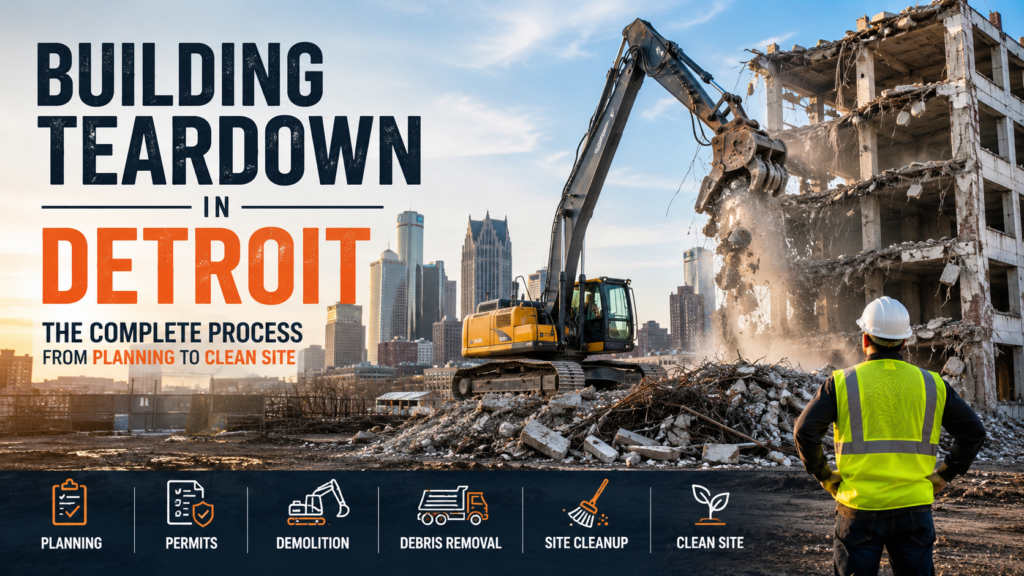
Once permits are secured, hazardous materials abated, and utilities disconnected, the physical teardown can proceed. For most Detroit residential and commercial structures, the primary teardown method involves mechanical demolition with excavators. A skilled excavator operator methodically breaks apart the structure, beginning typically with the roof and upper floor structures and working downward. The excavator arm and bucket are used to grip, pull, and break structural elements, creating a controlled collapse of the structure into a manageable debris field within the building footprint.
For larger commercial or industrial structures, the teardown sequence may be more deliberately planned by a structural engineer to address load redistribution ensuring that as portions of a structure are removed, remaining elements do not collapse unexpectedly. Some larger buildings in Detroit require more sophisticated demolition sequencing, particularly where partial demolition is occurring adjacent to standing structures or where the building’s structural system requires specific sequencing for safe disassembly.
Dust and debris control are active management concerns throughout the teardown process. Water misting systems are commonly used to suppress dust, particularly during hot, dry weather. Temporary fencing protects the work zone from unauthorized entry. In urban Detroit neighborhoods where structures are often closely spaced, additional precautions are taken to protect adjacent properties during the teardown.
Debris Removal and Site Clearance
The debris generated during a building teardown must be sorted, loaded, and removed from the site. Experienced demolition contractors implement waste segregation practices to separate recyclable materials metal (which has significant scrap value and is typically separated immediately), concrete (which can be crushed and recycled as aggregate), clean wood, and general demolition debris. Michigan’s waste management regulations govern the disposal of demolition debris, and contracted demolition companies work with licensed haulers and disposal facilities.
Foundation removal follows structural demolition when complete site clearance is the goal. The concrete or masonry foundation is excavated, broken, and removed, with the resulting void backfilled with compactable material. Proper backfilling and compaction of the foundation excavation is essential to prevent settlement of the finished lot surface over time.
After the Teardown: Site Restoration
A professionally completed building teardown leaves a site that is graded, cleared, and ready for its next use. Depending on the project’s intended outcome, this may involve light finish grading to create a level, well-draining lot surface; seeding with grass or ground cover to prevent erosion during the interim period before development; or full site preparation including subgrade work for new construction.
Detroit’s large-scale blight elimination programs have developed standardized approaches to post-teardown lot restoration that include grading, seed application, and ongoing maintenance to prevent brush and weed regrowth. These restored lots represent an intermediate step in the transformation of former blighted properties into reusable urban land assets.
Frequently Asked Questions About Building Teardowns in Detroit
How long does a residential teardown take in Detroit? A typical single-family home teardown in Detroit including structure demolition, foundation removal, and debris clearing usually takes one to three days for the physical work, though the complete project timeline including permitting and abatement (if required) is typically several weeks.
Does the city of Detroit have specific requirements for teardown contractors? Yes. Detroit requires contractors performing wrecking work to hold an approved City of Detroit Wrecking Contractor designation, maintain state contractor licensing, carry appropriate insurance, and comply with permit and dust monitoring requirements. Working with licensed, designated contractors protects property owners and ensures compliance.
What happens to the materials from a building teardown? Metal is recycled for scrap value. Concrete is often crushed and reused as aggregate base material. Clean wood may be chipped for composting or, in deconstruction scenarios, salvaged for reuse. General demolition debris goes to permitted disposal facilities in accordance with Michigan waste management regulations.