
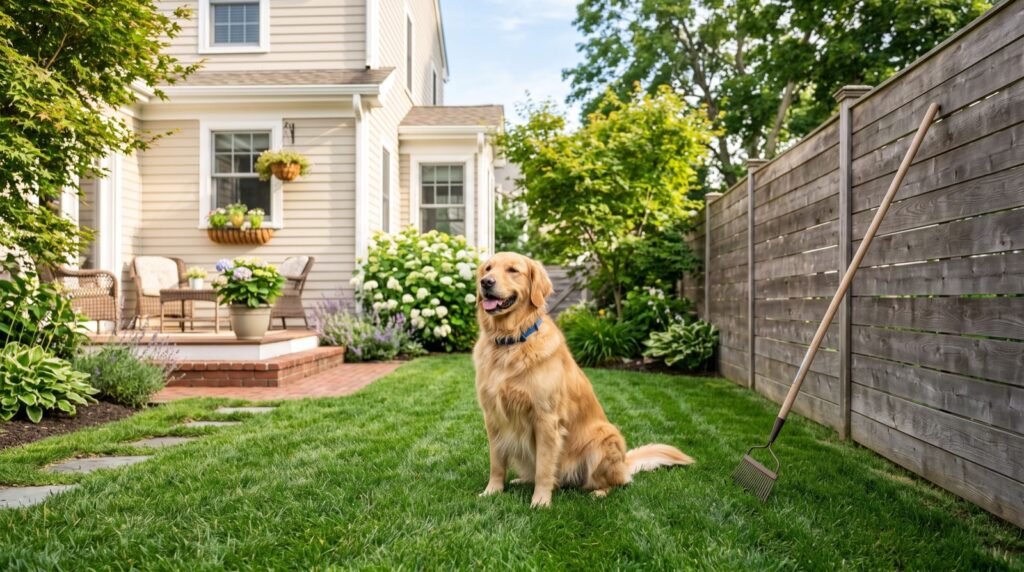
Cleaning Up After Large Breeds: A Big-Dog Owner’s Guide
Cleaning up after large breeds is a different sport than tidying up after a toy poodle. Great Danes, Labradors, German Shepherds, and Mastiffs produce serious volume, and the gear that works for a small dog buckles fast. This guide is written specifically for big-dog owners who need cleanup that keeps up.
I share a yard with two 80-pound dogs, so I have learned the hard way which tools survive and which snap. Here is what actually works when the loads are large and daily.
Why big dogs demand different gear
Volume is the obvious challenge, but it is not the only one. Large breeds produce heavier, softer waste that flimsy rakes smear rather than lift. A tool built for a Chihuahua simply cannot grab a Mastiff’s output in one pass.
Diet plays a role too. The American Kennel Club notes that large-breed nutrition and portion size directly influence stool volume and consistency, which is why big dogs on high-quality diets can be easier to clean up after than those on cheap fillers.
For heavy-duty cleanup, a rugged design like Gogostik handles big loads without the multiple scoops and re-grabs that make cleanup miserable.
What features to prioritize for large breeds
Wide jaw capacity
A bigger jaw grabs more per squeeze, which means fewer passes and less time hunched over. This is the number-one upgrade for big-dog households.
Reinforced construction
Metal beats plastic every time at this scale. Heavy waste stresses hinges and springs, so durable materials keep the tool working season after season.
Bag support that stays open
A tool that holds the bag open frees both hands and prevents the sag-and-spill problem common with heavy loads. A Pooper Scooper with Bag keeps the liner positioned so nothing misses.
Breed volume reference
| Breed size | Example breeds | Daily output | Cleanup frequency |
|---|---|---|---|
| Giant | Great Dane, Mastiff | Very high | Twice daily |
| Large | Labrador, Shepherd | High | Daily |
| Medium | Border Collie, Boxer | Moderate | Daily to every 2 days |
How do I handle a multi-large-dog yard?
With two or more big dogs, the math changes quickly. My approach is a morning and evening sweep, because a full day of accumulation from giant breeds is too much for a single session and starts to smell fast.
Split the yard into zones and clear the highest-traffic corners first. Keep a heavy-duty bag on the tool so you can empty a full grab without repacking. And restock supplies weekly, because running out mid-week with big dogs is a genuine problem.
- Run two sweeps a day for giant breeds.
- Work the busiest zones first while your energy is high.
- Use thick liners that hold heavy loads without tearing.
- Rinse the tool after every session to control odor.
Storage and disposal for high-volume households
Big dogs generate enough waste that your disposal setup matters as much as your scooper. A small kitchen-style trash can will overflow and reek within a day. Invest in a large, lidded outdoor bin dedicated to pet waste.
Controlling odor at scale
Odor is the constant complaint in big-dog homes. Line the bin, tie every bag tightly, and sprinkle a pet-safe deodorizer at the bottom. Empty it on trash day without fail, because a week of giant-breed waste in summer heat becomes unbearable fast.
Winter considerations for large breeds
Cold weather freezes heavy waste to the ground, and big-dog waste is the hardest to pry loose. A strong metal edge is essential in winter, and daily cleanup prevents an impossible frozen backlog from forming.
Health monitoring through cleanup
Here is an underrated benefit of daily scooping: you become the first to notice changes in your dog’s health. Consistency of stool, unusual color, or visible parasites are early warning signs that a weekly cleanup would miss entirely.
- Note any sudden change in consistency or frequency.
- Watch for signs of worms and report them to your vet.
- Track whether a diet change improves or worsens output.
- Flag blood or mucus immediately as a vet concern.
For large breeds especially, this daily check-in turns a chore into a genuine health tool.
Protecting your lawn from big-dog damage
Large breeds do more than leave more waste; concentrated urine and feces burn grass. Rotate potty zones when possible, water problem spots to dilute nitrogen, and reseed damaged patches each season. Prompt scooping limits how long acidic waste sits on the roots.
For homeowners who want vetted advice on managing a heavily used yard, I recommend trusted professionals who understand the demands large animals place on outdoor spaces.
Frequently Asked Questions
What is the best pooper scooper for large dogs?
Choose a metal, wide-jaw scooper with integrated bag support. Wide capacity means fewer passes, and reinforced construction survives the heavier, softer waste large breeds produce.
How often should I clean up after a big dog in 2026?
Large breeds usually need daily cleanup, and giant breeds often need twice-daily sweeps. Frequent removal prevents odor, flies, and lawn burn from concentrated waste.
Why does my big dog’s waste burn the grass?
High-protein diets make waste acidic and nitrogen-rich. Concentrated in one area, it scorches grass roots. Rotating potty zones and prompt removal reduce the damage.
Are plastic scoopers okay for large breeds?
Generally no. Plastic flexes and cracks under heavy loads. Metal tools with strong springs hold up far better for big-dog households.
Training big dogs to a designated potty zone
One of the smartest moves a big-dog owner can make is teaching the dog to use a single area. Concentrated cleanup is faster, and it spares the rest of your lawn from burn and damage.
Start by leading your dog to the chosen spot on leash for every bathroom break, then reward immediately after they go. Large breeds are intelligent and food-motivated, so most catch on within a couple of weeks of consistent repetition. Keep the zone away from play areas and patios to separate mess from the spaces your family uses.
Once the habit sets, your entire cleanup shrinks to one manageable corner. Instead of crisscrossing a full yard hunting for heavy piles, you clear a defined area in a single pass. For giant breeds that produce serious volume, this focus is the difference between a quick daily sweep and a dreaded expedition.
Final word
Cleaning up after large breeds is manageable once you match the gear to the job. Prioritize wide jaws, metal construction, and reliable bag support, then run consistent sweeps sized to your dogs’ output. Do that and even a giant-breed yard stays fresh and safe. Gear up with a heavy-duty scooper and thick liners today, and make big-dog cleanup a quick daily win.